


 021-51111890
 购物车()
购物车()
 sales@molnova.cn







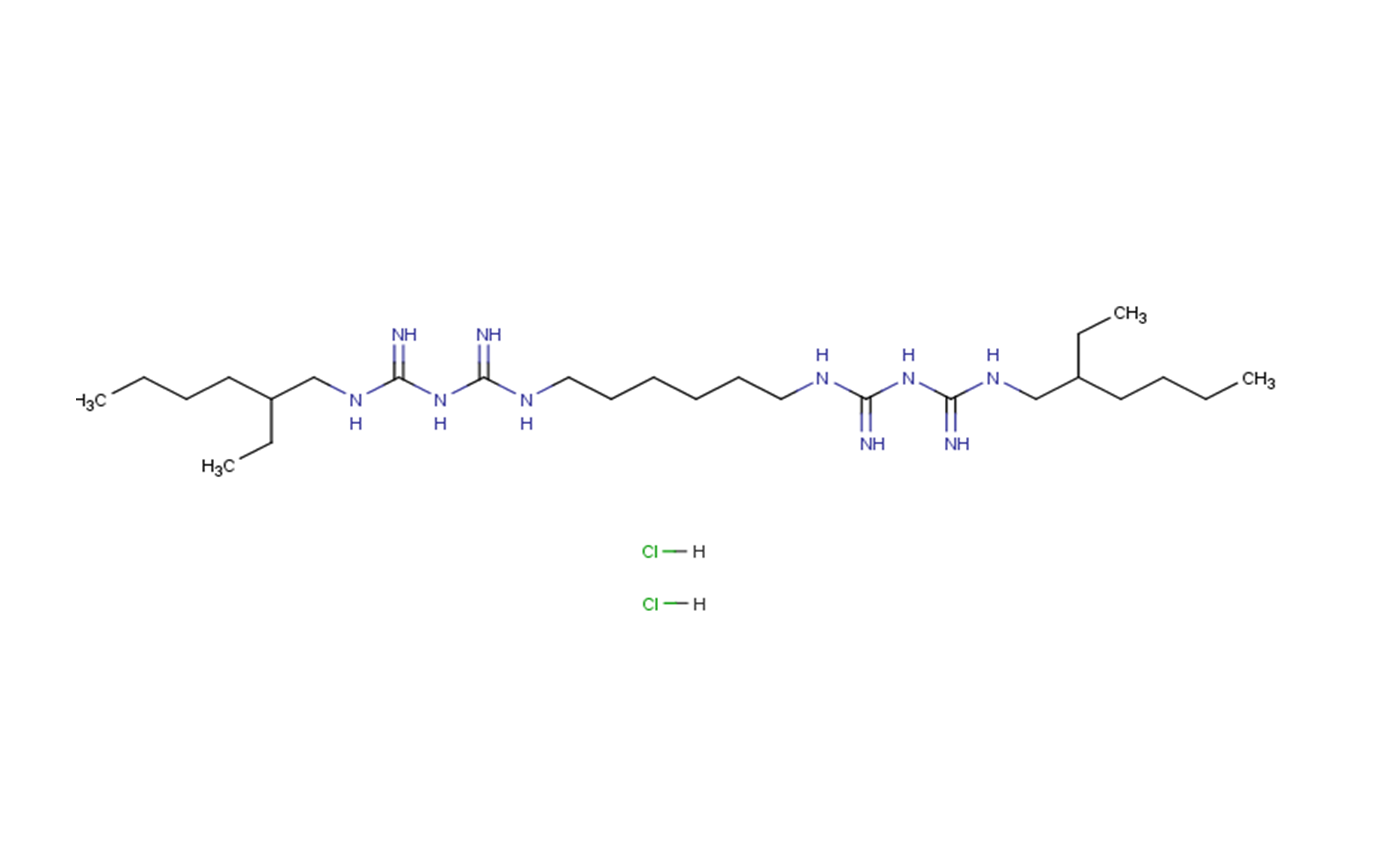
Alexidine dihydrochloride
CAS No. 1715-30-6
Alexidine dihydrochloride ( —— )
产品货号. M23776 CAS No. 1715-30-6
Alexidine diHClide 对多种真菌病原体具有抗真菌和抗生物膜活性。
纯度: >98% (HPLC)
 COA
Datasheet
HNMR
HPLC
MSDS
Handing Instructions
COA
Datasheet
HNMR
HPLC
MSDS
Handing Instructions
| 规格 | 价格/人民币 | 库存 | 数量 |
| 25MG | ¥437 | 有现货 |


|
| 50MG | ¥583 | 有现货 |
|
| 100MG | ¥818 | 有现货 |
|
| 200MG | 获取报价 | 有现货 |
|
| 500MG | 获取报价 | 有现货 |
|
| 1G | 获取报价 | 有现货 |
|
生物学信息
-
产品名称Alexidine dihydrochloride
-
注意事项本公司产品仅用于科研实验,不得用于人体或动物的临床与诊断
-
产品简述Alexidine diHClide 对多种真菌病原体具有抗真菌和抗生物膜活性。
-
产品描述Alexidine dihydrochloride has antifungal and antibiofilm activity against a diverse range of fungal pathogens. Alexidine dihydrochloride is an anticancer agent that targets a mitochondrial tyrosine phosphatase, PTPMT1, in mammalian cells and causes mitochondrial apoptosis.
-
体外实验Alexidine dihydrochloride displays activity against most Candida spp.; MIC values of ≤1.5?μg/mL are observed for all isolates tested under planktonic conditions, with the exception of Candida parapsilosis and Candida krusei. Interestingly, Alexidine dihydrochloride also displays striking activity against clinically relevant fluconazole-resistant Candida isolates: C. albicans (CA2, CA6, and CA10), C. glabrata (CG2 and CG5), C. parapsilosis (CP5), and C. auris (CAU-09 and CAU-03).Inhibition of planktonic growth by Alexidine dihydrochloride reveals a complete inhibition of filamentation or proliferation of the imaged fungi. Alexidine dihydrochloride is able to decimate at low concentrations (1.5 to 6?μg/mL) mature biofilms of Candida, Cryptococcus, and Aspergillus spp. that are known to be resistant to almost all classes of antifungal drugs. In fact, at 10-fold-lower concentrations (150?ng/mL) of planktonic MICs, Alexidine dihydrochloride could inhibit lateral yeast formation and biofilm dispersal in C. albicans.Alexidine dihydrochloride results in 50% killing of HUVECs and lung epithelial cells, at concentrations 5- to 10-fold higher than the MIC required to kill planktonically growing fungal pathogens.
-
体内实验Chosen to focus on biofilm formation by C. albicans, since a murine biofilm model has been well established in this fungus and used for testing the effects of established and new antifungal agents. The effect of the drugs on the 24-h-old biofilms growing in the jugular vein catheters of mice is visualized microscopically, which reveals significantly lower density of the biofilms in catheters treated with Alexidine dihydrochloride. In fact, fungal CFU determination reveals that Alexidine dihydrochloride inhibits 67% of fungal biofilm growth and viability, compared to the control untreated biofilms.
-
同义词——
-
通路Apoptosis
-
靶点Apoptosis
-
受体PTPMT1|apoptosis
-
研究领域——
-
适应症——
化学信息
-
CAS Number1715-30-6
-
分子量581.71
-
分子式C26H58Cl2N10
-
纯度>98% (HPLC)
-
溶解度DMSO:250 mg/mL (429.77 mM; Need ultrasonic)
-
SMILESN=C(NCC(CC)CCCC)NC(NCCCCCCNC(NC(NCC(CC)CCCC)=N)=N)=N.[H]Cl.[H]Cl
-
化学全称——
运输与储存
-
储存条件(-20℃)
-
运输条件With Ice Pack
-
稳定性≥ 2 years
参考文献
1.Mamouei Z, et al. Alexidine Dihydrochloride Has Broad-Spectrum Activities against Diverse Fungal Pathogens. mSphere. 2018 Oct 31;3(5). pii: e00539-18.
产品手册


关联产品
-
NVS-CECR2-1
NVS-CECR2-1 是一种非 BET 家族的 Bromodomain (BRD) 抑制剂,是一种有效的,选择性的猫眼综合征染色体区域候选物 2 (CECR2) 抑制剂。NVS-CECR2-1 以高亲和力结合 CECR2 BRD (IC50=47 nM; KD=80 nM)。NVS-CECR2-1 表现出癌细胞毒性作用,并通过靶向 CECR2 以及非 CECR2 依赖性机制诱导癌细胞的凋亡。
-
Sodium taurochenodeo...
牛磺鹅去氧胆酸钠是动物胆汁酸的主要生物活性物质之一。牛磺鹅脱氧胆酸钠可诱导细胞凋亡,并显示出明显的抗炎和免疫调节特性。它可以增加葡萄糖诱导的胰岛素分泌并刺激α2细胞的电活动并提高胞质Ca(2+)浓度([Ca(2+)](c))。
-
RIPK3-IN-1
RIPK3-IN-1 是 II 型 RIPK3 DFG-out 位点抑制剂,IC50 为 9.1 nM。RIPK3-IN-1 抑制 RIPK1 和 RIPK2,IC50 为 5.5 和 >10 μM。RIPK3-IN-1 还是 c-Met 激酶抑制剂,IC50 为 1.1 μM。


